The Fairlamb group currently has 26 members: 1 principal investigator, 1 Research Lab Technician, 1 Technical Specialist, 4 PDRAs, 16 Ph.D. students, 1 MSc student, and 1 MChem students and 1 BSc student.
Research Lab Technician
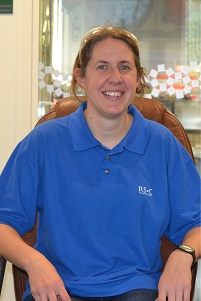
Dr. Charlotte Lee
Charlotte obtained both her MChem and PhD at the University of York. Her PhD project used DFT and parahydrogen enhanced NMR to study catalytic roles of iridium hydrides, under the supervision of Dr. John McGrady and Prof. Simon Duckett. She returned to the University, after a few years working as a school science technician, working as a technician in the undergraduate teaching laboratories as well as in the Fairlamb research group. Charlotte now works with the Fairlamb group and also supporting the other groups in the E114 lab.
Charlotte plays an important role in our group activities in addition to supporting the Departmental ReactIR equipment (IC10 and RIR15 with Si and Diamond probes), based in the Fairlamb laboratory.
Technical Specialist
Dr. Chris Horbaczewskyj
Chris obtained his MChem degree from Manchester Metropolitan University and then obtained his Ph.D. (CASE studentship award) at the University of Leeds, supervised by Prof. Richard Bourne and Dr. Charlotte Willans, focusing on the monitoring, modelling and optimisation of continuous flow reactions using on-line mass spectrometry. Chris undertook a three-month placement at AstraZeneca which allowed the applications and implementation of his work to pharmaceutically relevant examples.
Chris now works as a Technical Specialist to design, test, and implement new automation systems on various chemistries relating to the group. This is accomplished using high throughput reaction screening using a Chemspeed robotics platform, design of experiments and kinetics assays. Chris supports the Fairlamb group with transferring their catalytic reactions into an automated format for screening and large data gathering. Chris is currently working with Prof. Fairlamb and Prof. Lynam on designing a new automated flow platform to assist in screening different catalysts to analyse using time resolved infrared spectroscopy at the Central Laser Facility.
Post Doctoral Research Associates
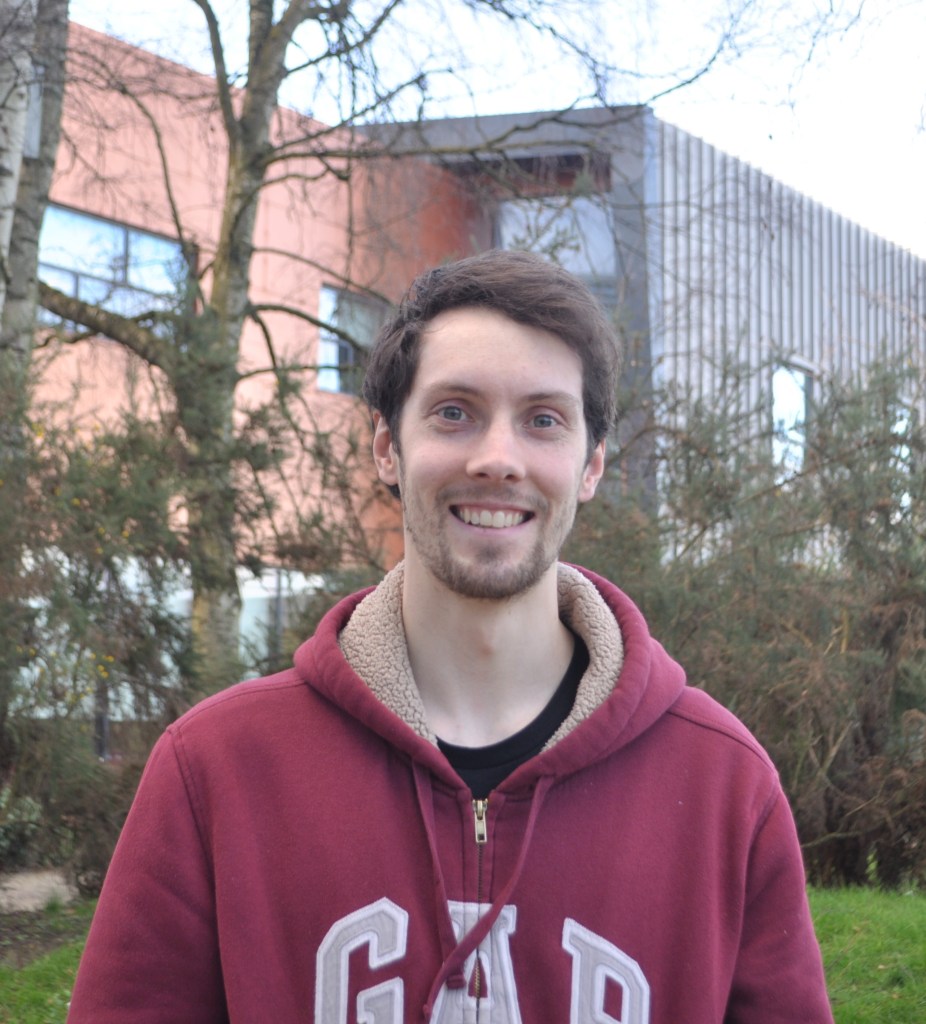
Dr. Ksenia Stankevich
Ksenia obtained her BSc and MSc degrees in Biotechnology from Tomsk Polytechnic University (Tomsk, Russia) where she worked on the development of biomaterials that could control pro-inflammatory response of macrophages. During this time she had an opportunity to join the research group at University of Heidelberg (Germany) where Ksenia conducted immunological studies.
Ksenia received her PhD in Chemistry from Montana State University (Bozeman, USA), working with Dr. Matthew Cook on stereoselective allylic cyclizations and rearrangements.
Currently, Ksenia is a PDRA joint between the Dr Chris Spicer group and Prof. Ian Fairlamb group. Her project aims to develop metal-mediated tools for protein modification.
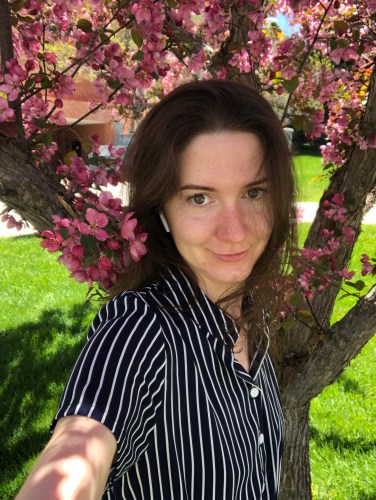
Dr. Sarah Wilson
Sarah is currently a Post doctoral research associate joint between the Dessent group and Fairlamb group.
Sarah completed her PhD in Plasma science and fusion energy at the University of York in 2018, specialising in the development of extreme ultraviolet laser systems. She then worked with XUV Lasers Inc. as a Laser engineering specialist. In March 2020 She stated a Post-doc at Colorado State University working on the development of EUV Imaging in lithography processes where she was Co-Pi on a NSF PFI grant working alongside ASML and XUV Lasers. She was lead investigator for NSF I-Corps grant for bringing research to industry, completing the program in June 2022.
She then completed a research fellowship at the University of Huddersfield under a innovate UK grant working on additive manufacturing alongside Wayland Additive.
Sarah joined the Dessent and Fairlamb groups in October 2023 to work on the development of Mass Spectroscopy and Infrared Spectrometry systems.
Dr. Shweta Choudhary
Shweta Choudhary is an organometallic chemist. She completed her PhD in 2024 with Prof. Igor Larrosa at The University of Manchester, UK. During her PhD she was actively involved in the development of a variety of C–H activation methods for the formation of C–C bonds as well as the synthesis of novel small molecule targets for medicinal applications. Currently she is a research associate working with Prof. Jason Lynam and Prof. Ian Fairlamb at the University of York. Her postdoctoral programme involves synthesising manganese catalysts for C–X bond functionalisation and understanding the reaction mechanism using inhouse time-resolved infra-red spectrometer and at the Central Laser Facility (ULTRA), based in Rutherford Appleton Laboratory.

Dr. Stefan Flesch
Stefan Flesch is a spectroscopist who specialises in time-resolved infrared spectroscopy. Stefan works with Prof. Jason Lynam and Prof. Ian Fairlamb helping to develop a system to rapidly analyse manganese catalytic reactions to further understand the mechanisms within the reactions using inhouse time-resolved infra-red spectrometer and at the Central Laser Facility (ULTRA), based in Rutherford Appleton Laboratory.
Ph.D. Students
Lucy Tomczyk (4th Year)
Lucy obtained her MChem degree at the University of York, spending the final year in the O’Brien group working on an alternative synthetic route to (-)-quinine. She then returned to York to begin her Ph.D. (EPSRC iCASE), supervised by Prof. O’Brien and Prof. Fairlamb, focusing on stereospecific Csp3-Csp2 Suzuki-Miyaura cross-couplings of heterocyclic boronates.
Stuart McHale (4th Year)
Stuart completed his MChem (with medicinal chemistry) degree at Newcastle University working with Dr. Kate Madden investigating small molecule analogues of berberine as potential therapeutics in neurodegenerative diseases. He also carried out an industrial placement with the centre for process innovation working on in-line analysis for continuous twin-screw wet granulation. In 2021 he began his Ph.D. co-supervised by Prof. O’Brien and Prof. Fairlamb working on stereospecific Csp3-Csp2 Suzuki-Miyaura cross-couplings of saturated heterocyclic boronates.

Fiona Brannan (4th Year)
Fiona completed a BSc in Chemistry at the University of Bristol in 2014, and has since worked as a researcher at Johnson Matthey in the Efficient Natural Resources sector with a focus on catalyst preparation, testing and scale up. In October 2021 she joined the Fairlamb and Green Chemistry groups at York as part of the mobility DTP to research sustainable catalysts for bio-based chemical production, particularly concentrating on the use of Starbon supported Pd-base metal catalysts.
Jake Walder (4th Year)
Jake did his final year MChem project at the University of York with Prof. Peter O’Brien involving the synthesis of bifunctional 3D building blocks. He started studying for his Ph.D. in 2022 with Prof. Fairlamb with a project titled “Uncovering Competitive Cycles in Cross-Couplings Through Rich-Data Analysis and Reaction Outcomes Gained by High-Throughput Experimental Screening”.
Outside of the lab Jake enjoys playing and watching football as well as playing music and going to gigs. He also enjoys travelling as much as he can, most recently Mauritius.


Alex Ascham (4th Year)
Alex completed his MChem degree at the University of York, spending his final year under the supervision of Alison Parkin, working towards the development of an electrochemical assay for Lytic Polysaccharide Monooxygenases. He is now a PhD student in the Grogan and Fairlamb groups, focusing on the “Engineering of Enzymes for the Preparation of Pharmaceutical Amides”. The project is funded by the BBSRC.
Mandalena Mendy (4th Year)
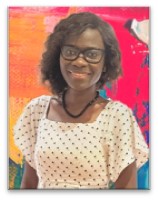
Mandalena studied chemistry at the University of Gambia before starting her Ph.D. in York. Originally supervised by Dr. Paul Clarke but now under the supervision of Prof. Fairlamb, Mandalena is performing research on Suzuki-Miyaura cross-coupling reactions focusing on finding and developing general conditions for a large range of substrates and pre-catalysts.
Aljawharah Alsalem (3rd Year)
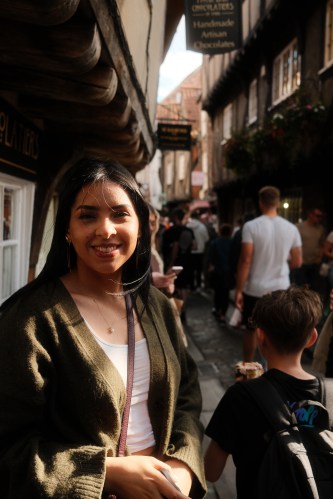
Aljawharah received her BSc at King Khalid University in Saudi Arabia in Pharmaceutical Science and her MSc from University of Bath in 2022 where she worked on C-19 norditerpenoid Alkaloids in drug discovery. She joined the Fairlamb and Unsworth groups in 2023 where she will be working on her Ph.D. in Phacelocarpus 2-Pyrone A natural product synthesis.
Barney Franklin (3rd Year)
Barney completed his undergraduate degree in mathematics at the University of York. He then went on to do a year at Eluceda as a data analyst as part of an AKT with Prof. Julie Wilson. He is now a Ph.D. student in the Fairlamb group, jointly supervised by Dr. Jessica Hargreaves “Data Analysis of Cross-coupling reactions: Enhanced Mathematical Understanding of Complexity and the Development of a Self-Optimising Robotic System for High-Throughput Experiments.”
In his free time, Barney likes to swim, run, and partaking in Fairlamb group socials.

Ben Chapman (2nd Year)
Ben is a first year PhD student studying palladium pre-catalyst activation, co-sponsored by Johnson-Matthey and as part of the PINZ CDT. He did his MChem at the University of Lincoln, studying NHC-containing pincer ligands with a view to produce high oxidation-state copper hydroxide compounds abstracting strong C-H bonds.
Ruby Spratt (2nd Year)
Ruby completed her MChem degree at the University of Oxford, spending the final year working in the Mackenzie group looking at IRMPD spectroscopy of tantalum clusters.
She started her PhD in September 2024 with Caroline Dessent and Ian Fairlamb looking at using infrared spectroscopy and mass spectrometry to investigate metal cross coupling reactions.

Max Atkinson (1st Year)
Max completed his MChem degree at the University of York, spending his final year on a industry placement at CPI (Centre for Process Innovation). He is now a PhD student in the Fairlamb group working on “accelerating catalytic reaction optimisation through an innovative reactor design for high throughput experimentation” co-sponsored by Labman Automation and as part of the PINZ CDT.
Niamh McArdle (1st Year)
More information coming soon
Alex Bradley (1st Year)
More information coming soon
Molly Fackerell (1st Year)
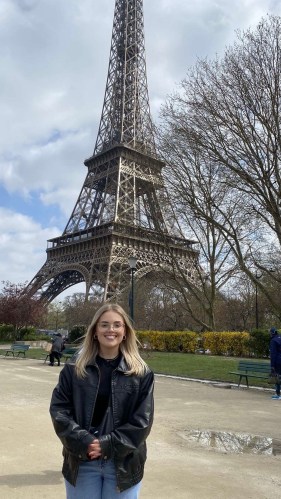
Molly earned her MChem degree from the University of York. Throughout her final year she worked at GSK, where she developed and optimised procedures to introduce terminal modifications to oligonucleotides. In 2025, she began studying for her Ph.D., joining the Fairlamb and Smith research groups. Her research, funded by Johnson Matthey, is titled, ‘Using Gels to Encapsulate Reactive Low-Valent Platinum Group Metals for Applications in Catalysis and Synthesis.’
Grace Brown (1st Year)
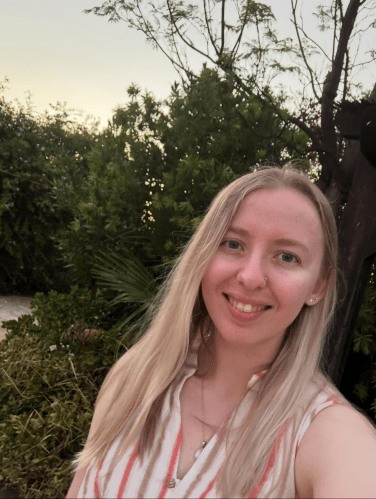
Grace completed her MChem degree at the University of Lincoln and spent her final year on an industrial placement at AstraZeneca, where she developed a novel Inductively Coupled Plasma Mass Spectrometry (ICP-MS) approach for quantifying oligonucleotide therapeutics. She is now a PhD student in the Halse and Fairlamb groups, with her research titled ‘Benchtop NMR for Automated Analysis in High-throughput Reaction Screening’.
Mark Poole (1st Year)
Mark completed his MSci at the University of Manchester, carrying out his final-year project under the supervision of Prof. Sam Hay. His work explored the use of molecular dynamics and electrostatics as a screening tool for high-throughput, AI-driven enzyme sequence redesign. In 2025, he joined the University of York as a PhD student, working across the Grogan and Fairlamb groups. His research combines biochemistry and organic chemistry to develop amide bond synthetases as sustainable catalysts for producing amide-containing pharmaceutical compounds.
MSc Student

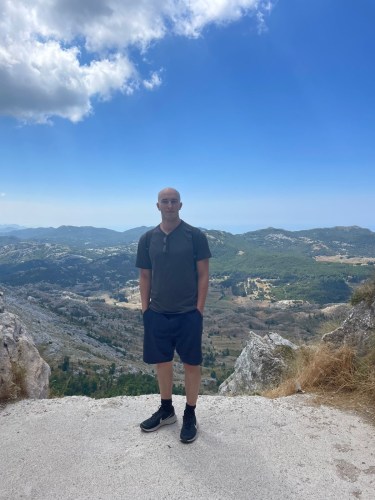
Christina received her BSc in Chemistry from the University of York and is now completing her MScR with the Fairlamb group. Christina’s research is focused on probing Suzuki-Miyaura cross coupling reactions with Csp3 boron reagents and Csp2 organohalides, with the transmetallation step being a key for analysis.
When Christina’s not handling chemicals, you can find her playing drums, singing and baking for friends.
MChem Students
Harry Campbell
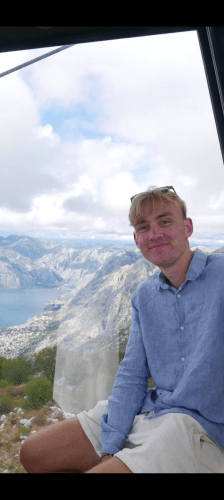
Harry did his 3rd year miniproject with Prof. Peter O’Brien focussing on the design and synthesis of inhibitors of the Nsp3 macrodomain in SARS-CoV-2. During his MChem year, Harry will be working on Ligand effects in a multi-functional Pd-catalysed cross-coupling reaction. Harry hopes to continue his studies next year into a PhD in synthetic chemistry. In his free time he likes to play guitar, cook and play football.
 fairlamb.group